

Air conditioning has become a staple in our lives, whether we’re relaxing at home or driving on a hot summer day. But have you ever wondered how the A/C system in your car differs from the one that keeps your house cool? While both systems share the goal of making you comfortable, they operate differently due to their distinct environments and demands.
- The Basics: Cooling Power and Space
- Home A/C Systems: Designed to cool large spaces, home air conditioners have to cover more ground. Whether it’s a central air system cooling an entire house or a window unit chilling one room, these systems need the power to handle a lot of air and keep it at a consistent temperature. They typically run on electricity and are built to work steadily over long periods.
- Car A/C Systems: In contrast, your car’s A/C system is designed to cool a much smaller space—the interior of your vehicle. It’s powered by the car’s engine, which means it only runs when the car is on. The system works quickly to cool down the car, which often heats up rapidly in the sun, but it doesn’t need to maintain that cool environment for hours at a time like a home system does.
- The Refrigeration Cycle: Similar Yet Different
- Both home and car A/C systems use a refrigeration cycle to cool the air. This process involves refrigerant, a special fluid that absorbs and releases heat as it cycles through the system. In both cases, the refrigerant is compressed, cooled, and then allowed to expand, which absorbs heat and cools the air.
- The key difference lies in how these systems are designed to function. Home A/C systems are usually more robust and designed to cool air for a long time, while car A/C systems are more compact and must work efficiently in a confined space with the engine as their power source.
- Airflow and Ventilation: Static vs. Dynamic
- Home A/C Systems: Airflow in a home system is typically more static, with air ducts or vents strategically placed to ensure even distribution. The system often includes filters to clean the air, providing not just cooling but also improving indoor air quality.
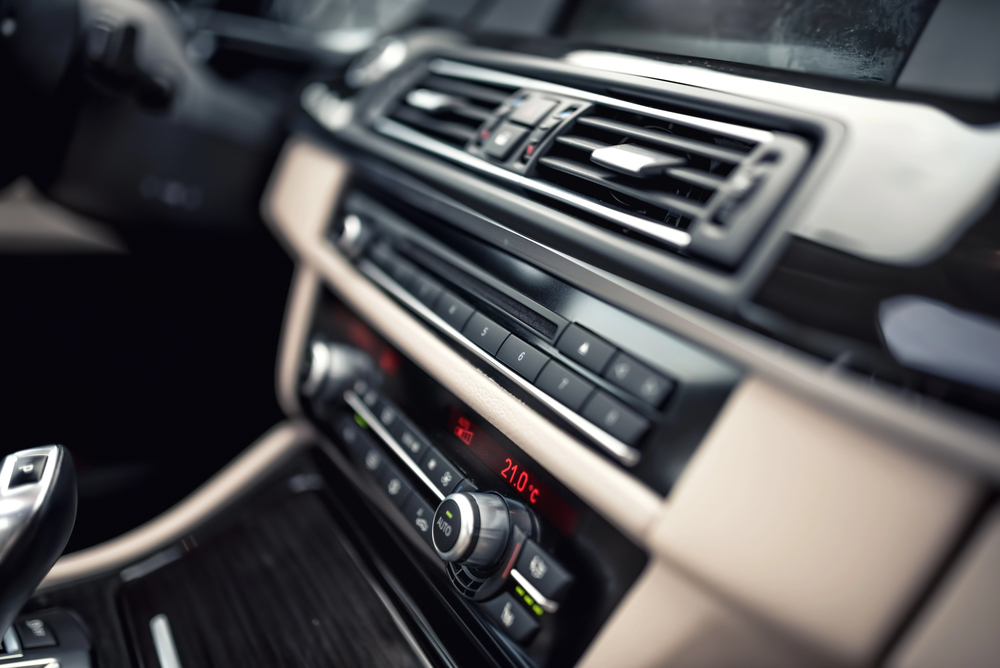
- Car A/C Systems: In a car, the airflow is more dynamic. The system has to account for movement, varying speeds, and changes in temperature as you drive. Car A/C systems also have built-in controls for directing airflow to different parts of the cabin, like the windshield or your feet, depending on what’s needed.
- Maintenance and Durability: Different Challenges
- Home A/C Systems: Maintenance for a home A/C system usually involves regular filter changes, occasional servicing of the compressor, and checking for leaks in the ductwork. Since these systems are stationary, wear and tear happen at a slower rate.
- Car A/C Systems: Car A/C systems face unique challenges due to constant movement, exposure to the elements, and the vibration of the engine. This means parts like the compressor or the condenser might need more frequent attention. Additionally, since the system is tied to the engine, any issues with the car’s mechanics can affect the A/C’s performance.
- Efficiency and Cost: Powering Your Comfort
- Home A/C Systems: These systems are generally more energy-efficient over time, especially if you have a modern unit with energy-saving features. However, because they run for longer periods and cool larger spaces, they can be costly to operate.
- Car A/C Systems: While your car’s A/C may not have as big an impact on your fuel efficiency as you might think, it does put extra load on the engine. That means using the A/C can slightly decrease your car’s fuel economy, particularly in stop-and-go traffic.
While both home and car A/C systems share the same basic principles, they are tailored to meet the specific demands of their environments. Understanding these differences can help you appreciate the comfort they provide—and might even help you troubleshoot the next time your A/C isn’t keeping you cool!
We don’t clean car air ducts but we do clean home air ducts!
For a professional air duct cleaning, look no further than Power Vac America. With over 30 years of experience, our licensed and certified technicians use state-of-the-art equipment and adhere to the highest standards in air duct cleaning, including the use of high-powered vacuums, brushes, and anti-fungal treatment agents to improve air quality and ensure that you breathe clean and healthy air. We are NADCA certified and licensed by the Texas Department of Licensing and Regulations (TACLA28012E).
For more information on our process, follow this link or call for a quote at 713-645-4611:
https://powervacamerica.com/air-duct-cleaning-houston-tx/
Have more questions? Check out our Frequently Asked Questions FAQ page! https://powervacamerica.com/faq/